
KUMIKO I
A miniature Japanese house
KUMIKO I - Wall shelf
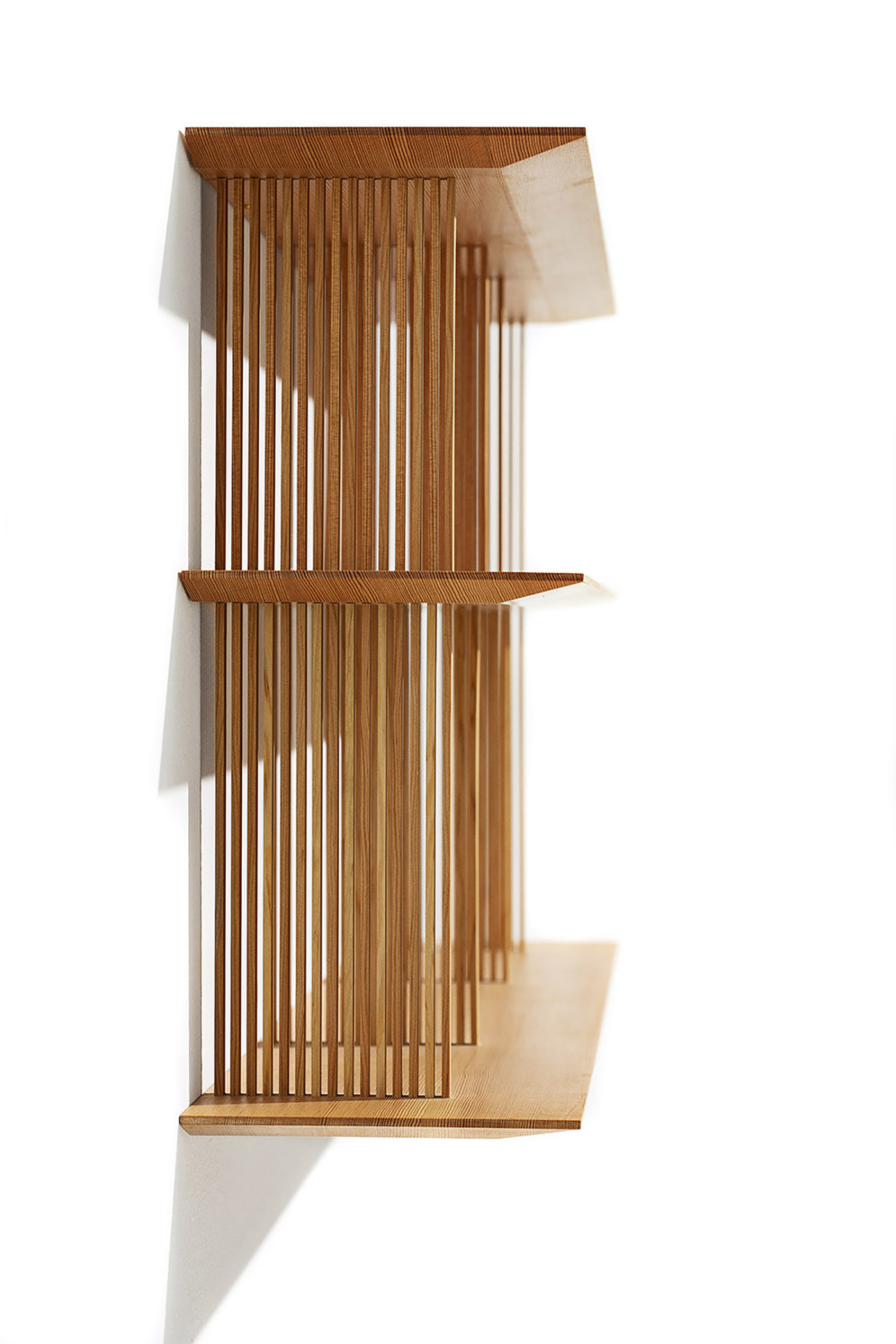
A very characteristic part of Japanese architecture, which I found fascinating when I was in Japan, is the delicate shoji screens used for sliding doors and windows in traditional Japanese houses. Kumiko is the name for the craft of creating the thin strips that make up the grid, which can provide transparency and air flow or be covered with handmade paper to serve as a screen.
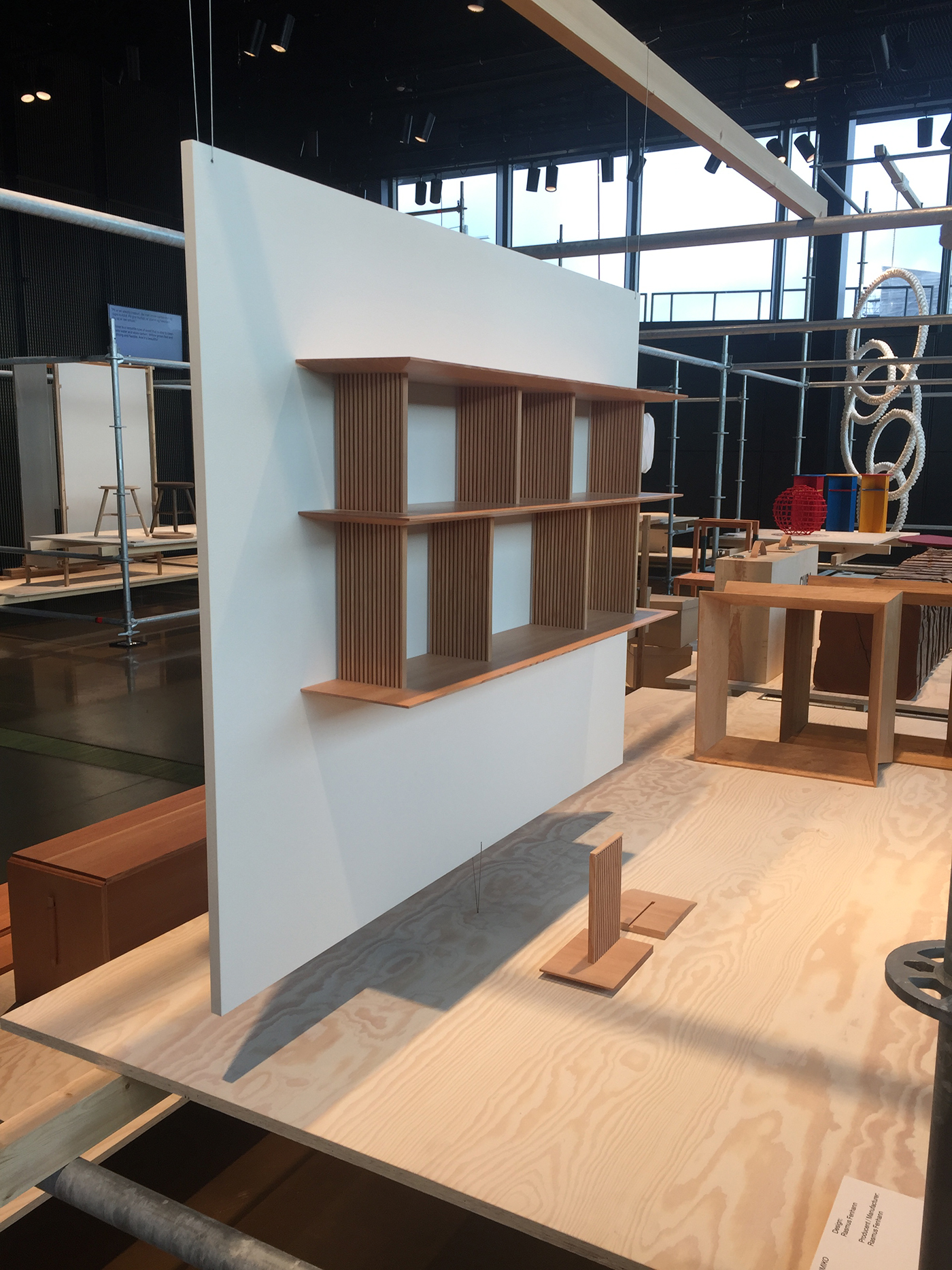
The Kumiko bookcase is an attempt to use the delicate aesthetic expression of the sliding screens in a new expression. The frames are made of thin strips and assembled with the shelves using sliding dovetails. Thus, here they act as a structural element, unlike in Japan, where the kumiko strips are always a decorative element. The vertical strips add transparency and interaction between the objects that are placed in the beautiful compartments, as in a miniature Japanese house. While the delicate kumiko slats appear to emerge directly from the wood, strong, hidden joints keep the shelves flat and reduce the material use to a minimum.
EXHIBITIED:

INSPIRATION: KUMIKO - KANAZAWA JAPAN
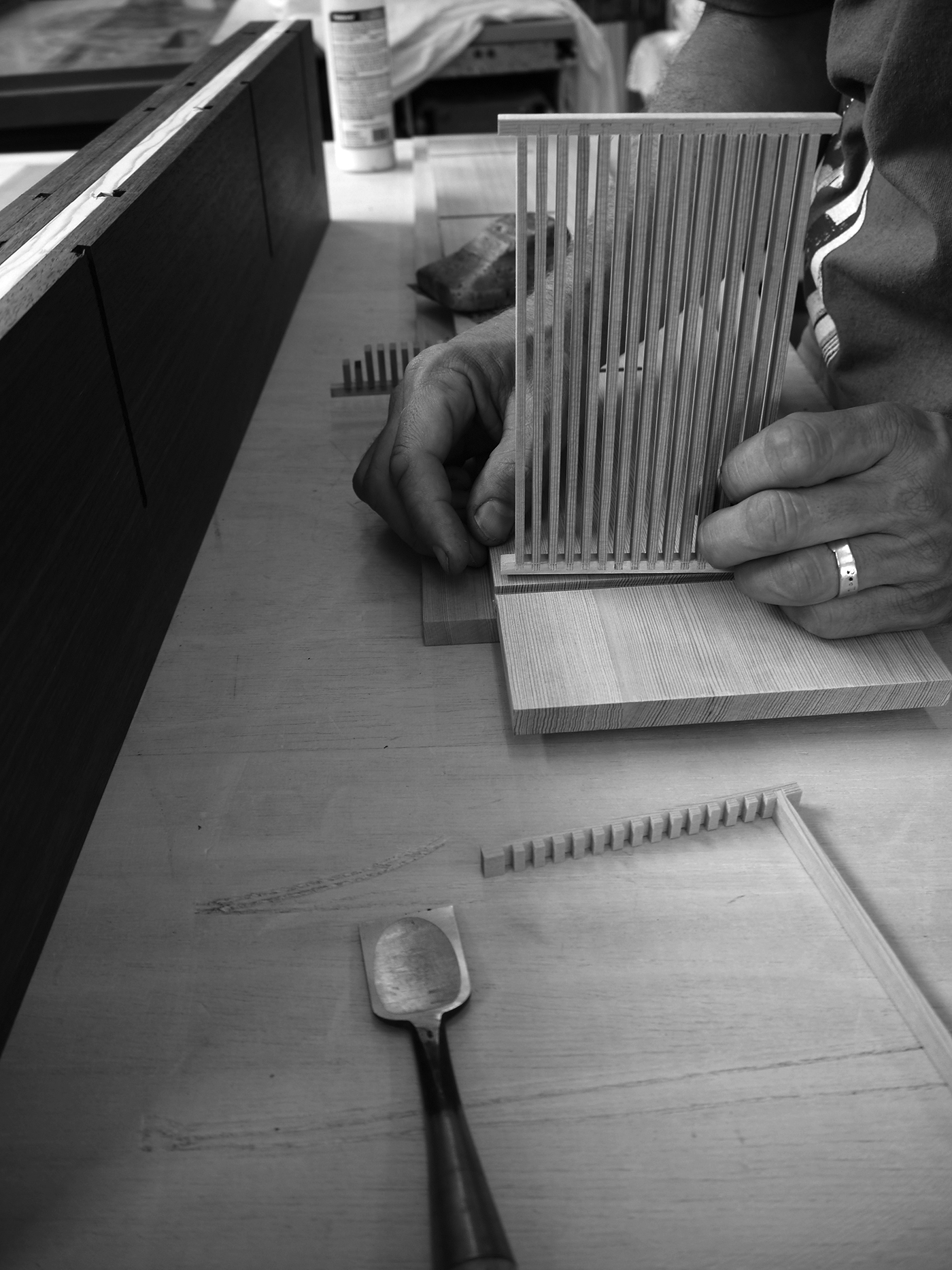
My Japanese mentor and teacher Fukushima-san was not just a box maker but also a kumiko expert, who had made all the shoji sliding doors and windows in his house using exquisite kumiko patterns. Fukushima-san taught me the basic techniques and let me make samples of the patterns, which exist in countless variations.

PROCES:

Measurements
Width:
90
cm
Height:
40
cm
Depth:
16
cm
Other
Type:
Shelf
Material:
Solid Oregonpine